


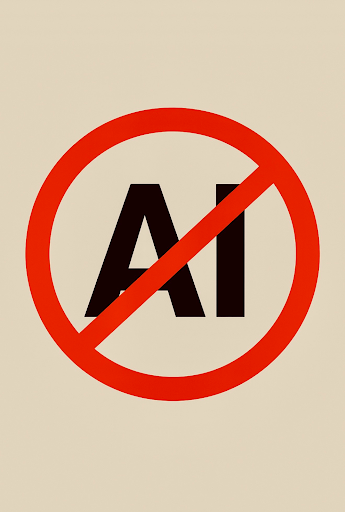
Artificial Intelligence may seem like a beneficial tool for students but it’s quietly doing more harm than good. Instead of making students eager towards learning and thinking critically, AI makes it too easy for students to rely on quick answers. The majority of students rely on AI tools like ChatGPT, which weakens the students writing, creativity, and problem solving skills.
Research has proven that this problem is taking root fast. A Pew Research Center study found that about one in four U.S. teachers believes AI tools do more harm than good for students. Another review published in Smart Learning Environments revealed that students who rely too heavily on AI lose essential skills such as problem-solving and making critical decisions. The International Journal of Education Technology discovered that students who frequently used AI showed lower academic performance and higher postponement. All the evidence illustrates that AI may look like a shortcut, but it’s really a setback.
Some people argue that AI helps students learn faster and gives them ideas and support when teachers aren’t available. They believe it’s a beneficial tool for students in order to advance their method of studying.
While this might sound convincing, in reality it ignores how AI is being used. Students who are using AI are focusing on the final answers that AI is able to quickly produce without reading to understand the content. Continuation of this method leads the students to lose creativity and rely on AI. By only copying and pasting the idea AI gives, students cannot fully comprehend the material.
AI also reduces creativity and methods of students’ thinking. When students mostly rely on AI, their ideas and writing start to sound the same. Because their work all comes from similar Artificial intelligence ideas, many students struggle to explain or expand on their thoughts when asked to do it themselves. Teachers begin to notice students struggle while asking them to explain things on their own. AI makes students rely on it despite it actually making it emptier.
The purpose of education is to develop students’ creativity and curiosity, not dependency on machines. Schools must set clear rules and teach students the proper way of using AI tools to learn responsibly as a guide, not a replacement. Students should learn to question, analyze, and create on their own. Acting now is better so we can make sure AI supports learning rather than destroying it.