





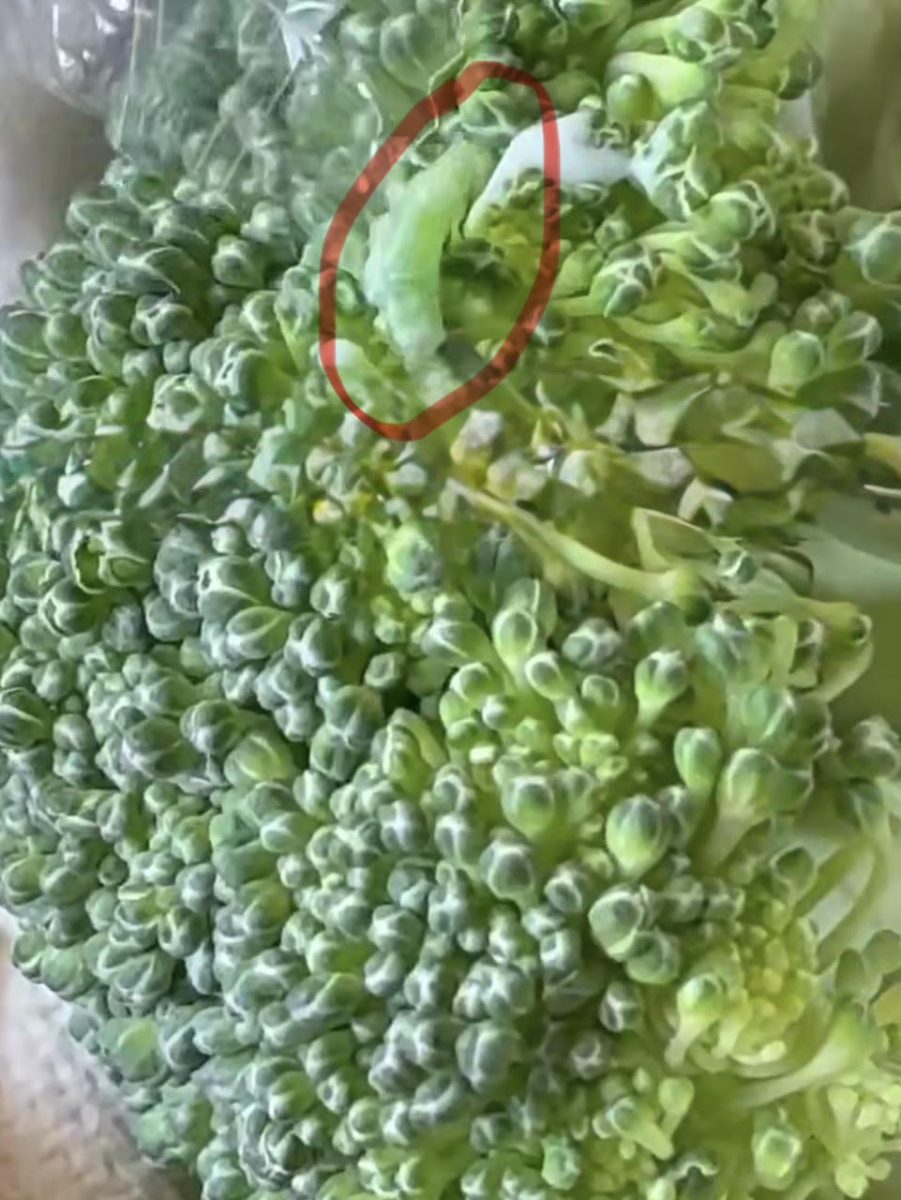
Nov. 18, 2025, sophomore Ella Taylor was beginning to eat her broccoli when she spotted a green worm hidden under the leaves. She was surrounded by her friends who shared her distaste.
“I was shocked and disgusted,” Taylor said.
Taylor then decided to ask the lunch management about the insect, the interaction was careless and dismissive.
“We felt a little ignored,” sophomore Ricardo Rodriguez said.
This raised questions about cafeteria precautions and sanitary practices. Taylor was told the situation was inevitable and there’s certain things that can’t be controlled, but, upon further research, proper cleaning of produce expels all produce worms.
“I don’t think it was inevitable, it could have been prevented…there’s things that you can wash your vegetables with that will kill the bugs,” Taylor said.
This incident has caused students to think twice about purchasing school lunch, in fear that an insect will be hidden under the vegetables.
“It changed how I feel about eating all lunch because most of the lunches have vegetables mixed into it, and it makes me wonder if they wash them correctly?” Taylor said.
Additionally, Taylor expected some form of compensation after the incident: a new lunch or produce. This contributed furthermore to her anger because she felt as if she wasn’t met halfway, and the problem wasn’t solved.
“I talked to the cafeteria staff; they said that they were sorry and that they cleaned the vegetables and they didn’t offer me compensation,” Taylor said.
Although situations like this are rare, there is a small natural risk that something growing in the environment is found in the food. However, the kitchen can clean these products and avoid pests from being served to students. They follow a process where staff begins by checking for any visual defects, trimming if necessary, and lastly cleaning and rinsing under running water. Any products that don’t follow these standards shouldn’t be served to students.
Stefan Slavov, the Food Operations Specialist at FCPS, shares what students should do to report any concerns.
“The best point of contact is the kitchen manager or any cafeteria staff member, though a nearby teacher can also help direct the concern to the food services team,” Slavov said.
After the incident was reported to the cafeteria staff, they checked the batch for other insects and documented the incident to help ensure the vendor can be contacted about the situation if needed. The students are advised to notify a staff member immediately if they find anything irregular as the staff is trained to respond to the situation respectfully.
“Our goal is to confirm that all products on hand are safe and of acceptable quality and to prevent similar issues going forward,” Slavov said.
Although there was a lack of disclosure to the students, upon talking to the cafeteria manager, there are certain precautions the cafeteria takes. According to Slavov, the incident should be reported through FNS, and they follow up with the produce supplier so they can investigate on their end as well.
Ultimately, this incident caused students to feel distressed about the quality of their food, but the cafeteria assures that this is an uncommon occurrence and proper cleaning should eliminate almost all possibilities of this happening again. If this happens to you, reach out to the cafeteria manager and don’t be scared to speak up.