





Overconsumption has become a buzzword online in the past year. We often associate it with overstuffed drawers, unlimited shopping sprees, and an endless stream of Amazon packages, but its true implications are more dire than most think. Overconsumption depletes natural resources such as soil, fish, forests, and water, which collapses ecosystems. This contributes to increases in pollution, toxic gases, and global warming. Additionally, this has become a major problem in recent years as statistics show that Gen Z consumes products at a higher rate than any previous generation. Per usual, social media is to blame for this surge.
“A lot of people on TikTok and social media see something they like and feel pressured to buy it,” sophomore Anna Hilderbrand said.
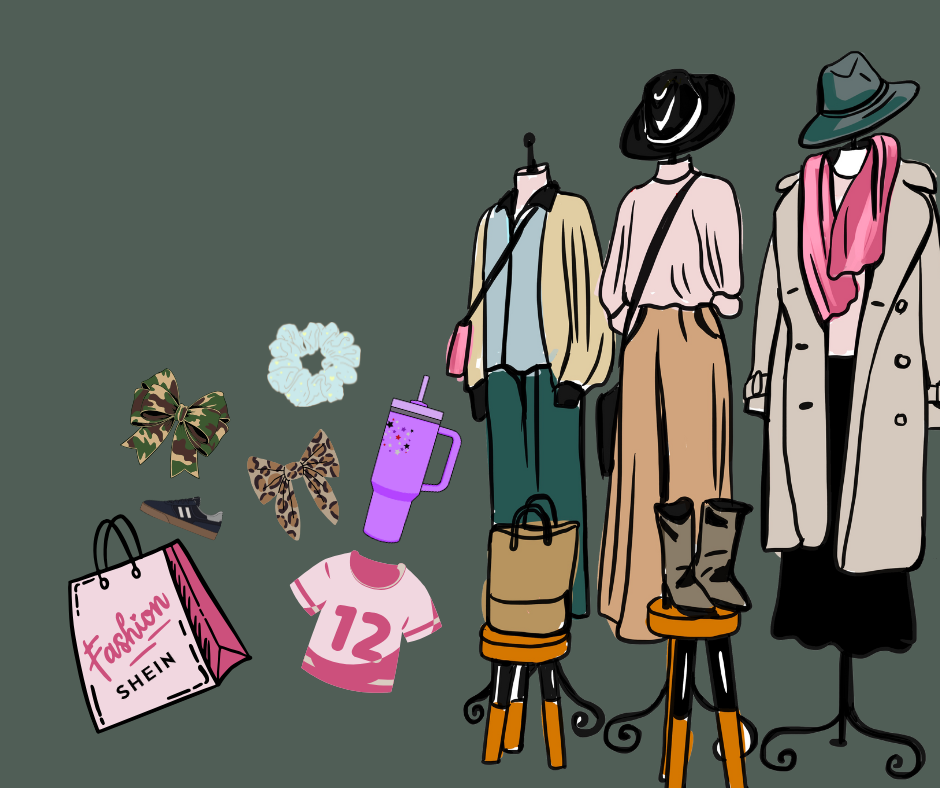
Microtrends are all around us. Recent microtrends include leopard print, camo print, Owalas, Stanley cups, bows, shirts with meaningless numbers printed on the front, Labubus, and aura rings. I myself have fallen victim to a number of these microtrends and have been tempted to buy all of them at one point. With social media, it seems like there’s a new product or aesthetic being promoted each time you open the app. What makes it worse, is that TikTok has started inserting ads into users’ feeds with a link to buy in the bottom left corner of the video. Feeding into these product promotions has become effortless, but it’s important to do some research to determine if the trend will be runthrough by the time the product reaches your doorstep.
“You can tell from the brand if it’s known for fast fashion,” sophomore Isabelle Quinn said. “If you really care you can go look at the list of materials.”
Brands such as Romwe, Shein, Edikted, Princess Polly, and Temu, are known for fast fashion and their designs are driven by popular styles online. These brands are able to produce items quickly by manufacturing products in developing countries, incorporating AI into their websites, and using synthetic materials such as polyester, nylon, or acrylic. Synthetic materials make for low quality items that unfortunately wear out after just a few wears. Manufacturing processes employed by many of these companies are highly problematic because they outsource to developing countries that have looser labor regulations than the US. These include limited child labor laws, minimum wage, and regulations that ensure safe work environments. This rapid production also takes a negative toll on the environment as it promotes waste, increases greenhouse emissions, and drains natural resources. So before purchasing something solely because it’s cheap, take a look at the brand’s reputation, seek out reviews, and view the materials. Taking a few moments before impulsively clicking ‘buy now’ will limit waste and help you make sustainable choices when shopping.
Trends aren’t bad altogether, they can help teens feel connected to their peers and develop a sense of identity and belonging. Microtrends become an issue when they promote fast fashion, wastefulness, and contribute to a cycle of overconsumption. Ultimately, ways you can stop the cycle are to stop supporting fast fashion companies, be more mindful when shopping, and consider buying second hand.

